Creative studio
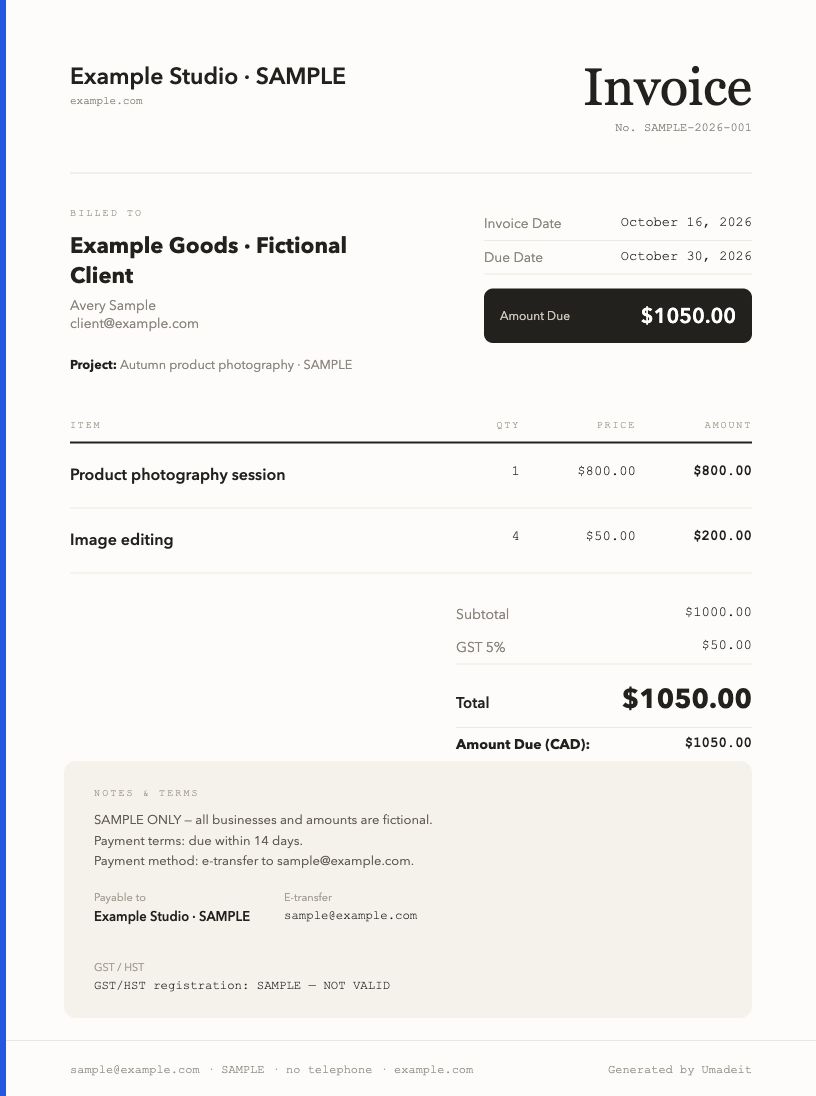 Show who provided the service and how the customer can reach them.Use a clear reference to connect the invoice, payment and any follow-up.Show when the invoice was issued. Keep service dates clear when they differ.Identify the customer who is being billed. Use fictional details in public examples.Describe the work, quantities and charges so the customer can check them.Make the charges and the final amount easy to distinguish.Registration status and the transaction affect the tax information required. Check the applicable CRA invoicing rules.State the agreed payment timing and terms clearly.Explain how the customer can pay without exposing private banking information in public examples.
1. Business name and contact details
Show who provided the service and how the customer can reach them.
2. Invoice number
Use a clear reference to connect the invoice, payment and any follow-up.
3. Invoice date
Show when the invoice was issued. Keep service dates clear when they differ.
4. Customer details
Identify the customer who is being billed. Use fictional details in public examples.
5. Service description
Describe the work, quantities and charges so the customer can check them.
6. Amounts and total
Make the charges and the final amount easy to distinguish.
7. GST/HST number and tax, if applicable
Registration status and the transaction affect the tax information required. Check the applicable CRA invoicing rules.
8. Payment terms
State the agreed payment timing and terms clearly.
9. Payment methods
Explain how the customer can pay without exposing private banking information in public examples.
Corporate
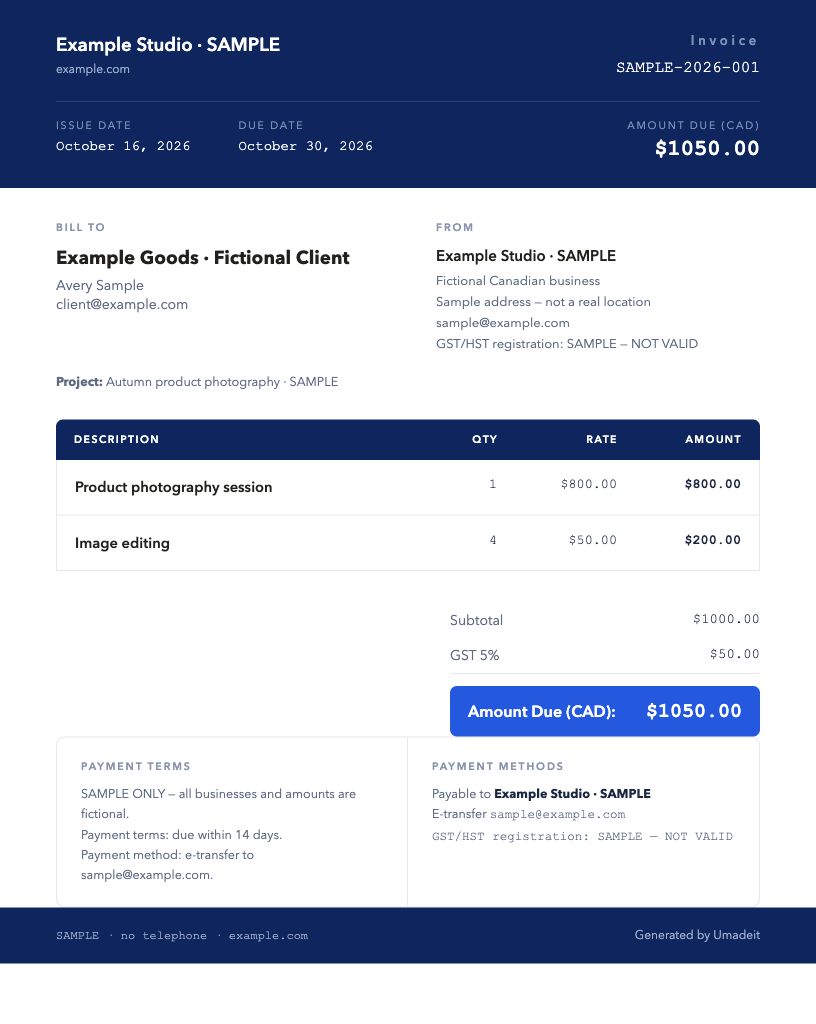 Show who provided the service and how the customer can reach them.Use a clear reference to connect the invoice, payment and any follow-up.Show when the invoice was issued. Keep service dates clear when they differ.Identify the customer who is being billed. Use fictional details in public examples.Describe the work, quantities and charges so the customer can check them.Make the charges and the final amount easy to distinguish.Registration status and the transaction affect the tax information required. Check the applicable CRA invoicing rules.State the agreed payment timing and terms clearly.Explain how the customer can pay without exposing private banking information in public examples.
1. Business name and contact details
Show who provided the service and how the customer can reach them.
2. Invoice number
Use a clear reference to connect the invoice, payment and any follow-up.
3. Invoice date
Show when the invoice was issued. Keep service dates clear when they differ.
4. Customer details
Identify the customer who is being billed. Use fictional details in public examples.
5. Service description
Describe the work, quantities and charges so the customer can check them.
6. Amounts and total
Make the charges and the final amount easy to distinguish.
7. GST/HST number and tax, if applicable
Registration status and the transaction affect the tax information required. Check the applicable CRA invoicing rules.
8. Payment terms
State the agreed payment timing and terms clearly.
9. Payment methods
Explain how the customer can pay without exposing private banking information in public examples.
Editorial
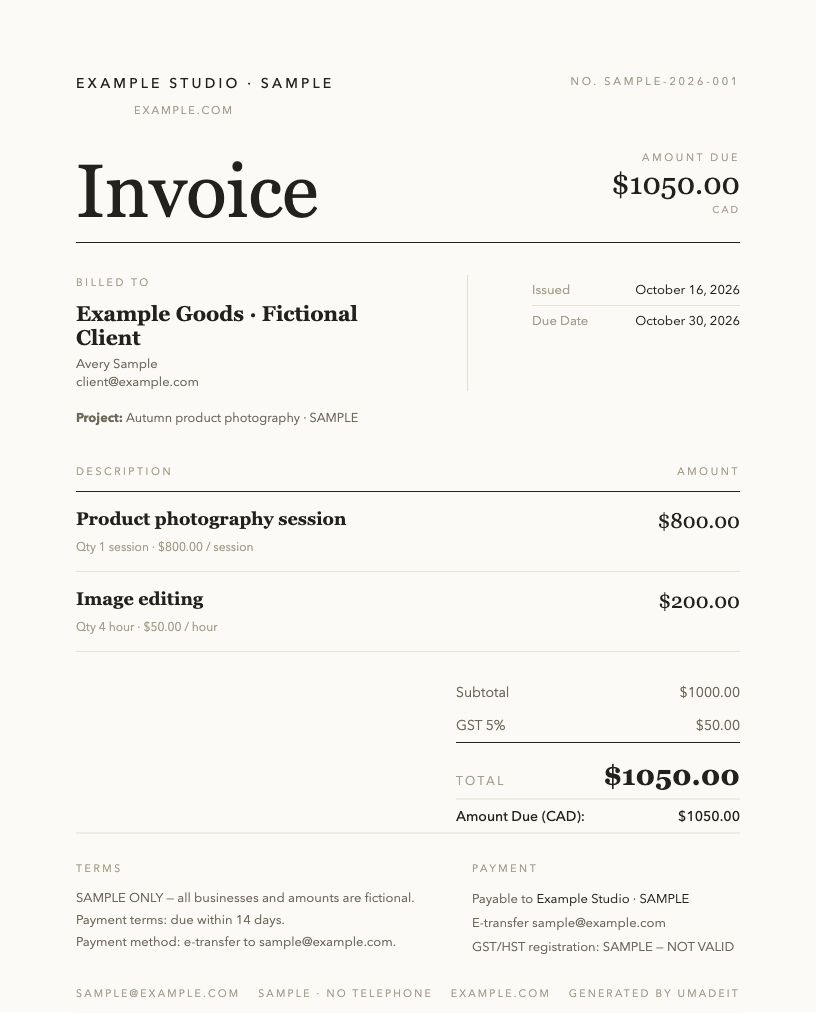 Show who provided the service and how the customer can reach them.Use a clear reference to connect the invoice, payment and any follow-up.Show when the invoice was issued. Keep service dates clear when they differ.Identify the customer who is being billed. Use fictional details in public examples.Describe the work, quantities and charges so the customer can check them.Make the charges and the final amount easy to distinguish.Registration status and the transaction affect the tax information required. Check the applicable CRA invoicing rules.State the agreed payment timing and terms clearly.Explain how the customer can pay without exposing private banking information in public examples.
1. Business name and contact details
Show who provided the service and how the customer can reach them.
2. Invoice number
Use a clear reference to connect the invoice, payment and any follow-up.
3. Invoice date
Show when the invoice was issued. Keep service dates clear when they differ.
4. Customer details
Identify the customer who is being billed. Use fictional details in public examples.
5. Service description
Describe the work, quantities and charges so the customer can check them.
6. Amounts and total
Make the charges and the final amount easy to distinguish.
7. GST/HST number and tax, if applicable
Registration status and the transaction affect the tax information required. Check the applicable CRA invoicing rules.
8. Payment terms
State the agreed payment timing and terms clearly.
9. Payment methods
Explain how the customer can pay without exposing private banking information in public examples.
Nine fields to review
- Business name and contact details
Show who provided the service and how the customer can reach them.
- Invoice number
Use a clear reference to connect the invoice, payment and any follow-up.
- Invoice date
Show when the invoice was issued. Keep service dates clear when they differ.
- Customer details
Identify the customer who is being billed. Use fictional details in public examples.
- Service description
Describe the work, quantities and charges so the customer can check them.
- Amounts and total
Make the charges and the final amount easy to distinguish.
- GST/HST number and tax, if applicable
Registration status and the transaction affect the tax information required. Check the applicable CRA invoicing rules.
- Payment terms
State the agreed payment timing and terms clearly.
- Payment methods
Explain how the customer can pay without exposing private banking information in public examples.
Keep the records behind the invoice
An image illustrates the fields. In Umadeit, the invoice record can stay connected to the customer and recorded payments; expense records hold their category and receipt details. Review amounts and tax treatment before sending an invoice.
Common questions
What if I am not registered for GST/HST?
If you are not registered and do not have to register, do not add GST/HST as though you were a registrant. Check the threshold and special taxi/rideshare rules first.
How long should I keep invoices?
Generally keep records for 6 years from the end of the last tax year they relate to. Late-filed returns, disputes and some asset records can require longer retention.
Are all nine fields mandatory on every invoice?
These are useful business fields, not nine universal legal requirements. CRA input-tax-credit documentation requirements change at totals of $100 and $500. Follow the linked table for supplier identity, tax details, registration number, buyer, description and payment terms.